


Manufacturing heavy-duty drive pulleys for extreme industrial environments requires uncompromising precision and structural integrity. A common yet highly demanding configuration involves a 304L stainless steel pulley shell (e.g., Length 2800mm, Wall Thickness 37mm) welded to carbon steel hubs (ASTM A572 GR50).
Achieving exact geometric tolerances and long-term reliability in this dissimilar metal configuration presents significant physical and thermodynamic challenges. For global procurement teams and conveyor engineers, understanding how manufacturers overcome these challenges—specifically through the use of internal stiffening rings (support discs)—is crucial for evaluating pulley quality and lifecycle costs.
When fabricating a large-span (2800mm), unsupported hollow cylinder, two major challenges arise during manufacturing:
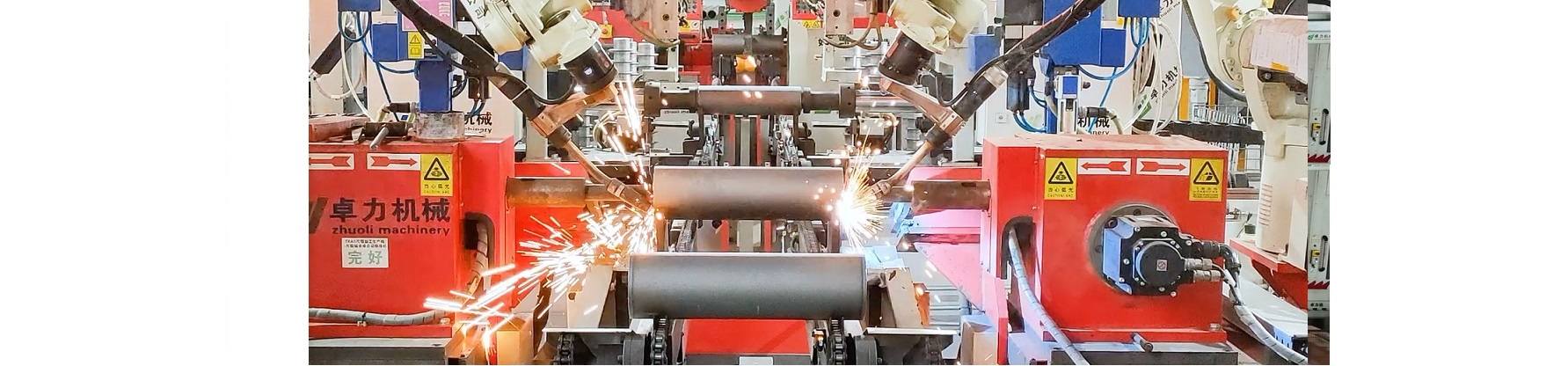
Connecting the stainless steel shell to the carbon steel hub requires large-heat-input, deep-groove welding.
The Thermodynamic Challenge: 304L stainless steel has a thermal expansion rate approximately 30% higher than carbon steel, yet it has lower thermal conductivity. Simply put, the two metals expand and contract at very different rates when heated and cooled.
The Result: This mismatch generates massive internal pulling forces. On a 2800mm unsupported span, the severe expansion and contraction at the ends can cause the shell to warp, lose its roundness (out-of-round), or suffer "saddle-shaped" collapsing.
During the final lathe turning process to achieve a smooth outer diameter, long thin-walled tubes (relative to their length) act like tuning forks. The cutting tool induces high-frequency vibrations (chatter or tool deflection), making it incredibly difficult to guarantee the strict surface roughness and cylindricity required by engineering drawings.
To counteract these physical phenomena, engineered internal stiffening rings are integrated into the pulley shell. Here is how they transform the pulley during both manufacturing and operation:
During fabrication, the rings act as a rigid internal scaffold. They effectively constrain the high thermal expansion and cooling shrinkage of the 304L shell during the dissimilar metal welding process, heavily minimizing distortion. Later, during CNC machining, these rings act as internal steady rests, dampening vibrations and eliminating chatter to ensure flawless geometric tolerances.
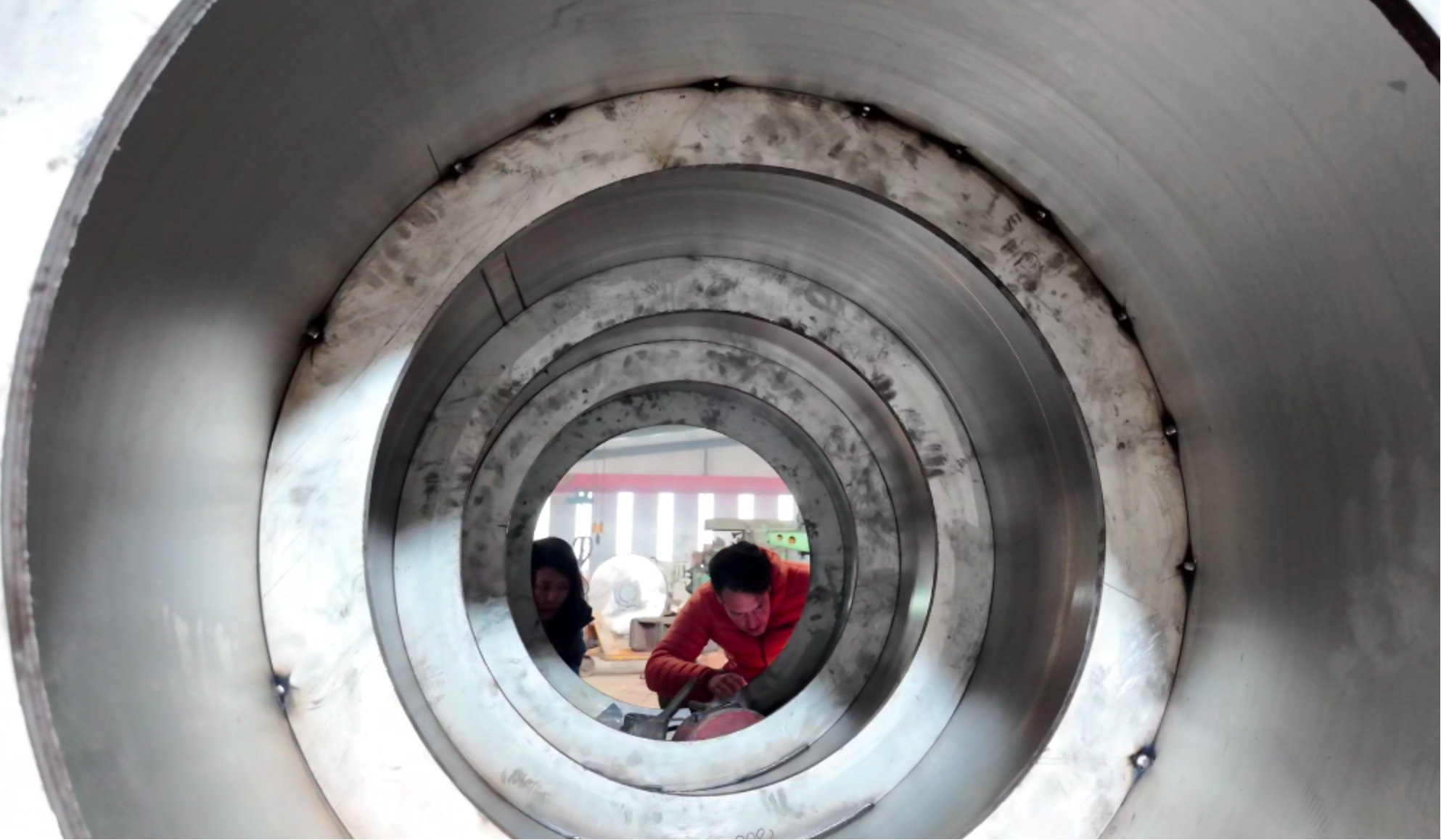
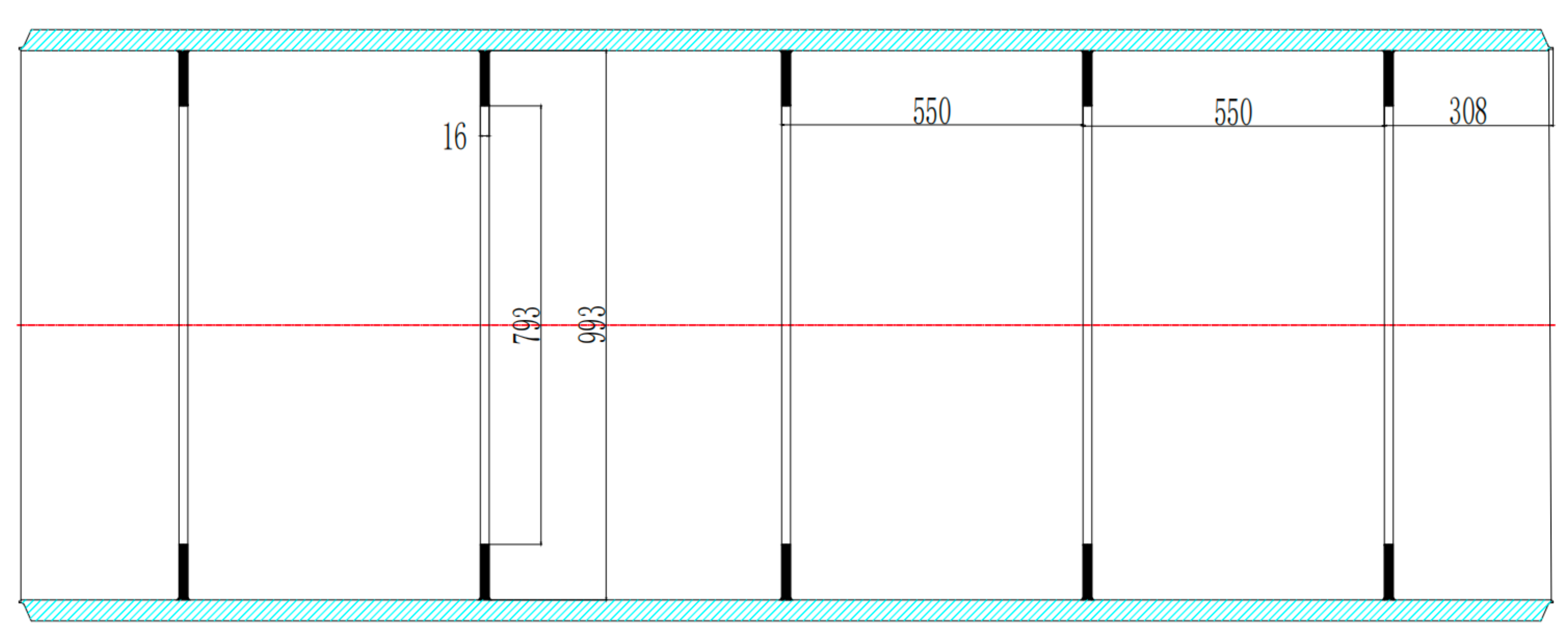
Heavy-duty drive pulleys endure extreme radial belt tension, especially during heavy-load startups. By strategically placing 5 stiffening rings inside, the long 2800mm span is divided into 6 high-rigidity zones. This prevents the middle of the hollow tube from buckling or collapsing, slashing the risk of unexpected downtime.
2. Extends Fatigue Life & Prevents Weld Cracking:
A loaded 2800mm pulley will inevitably experience micro-bending. The internal rings change the mechanical model of the pulley to a "multi-span continuous support" structure. Instead of operational stress concentrating solely at the vulnerable end-disc welds, the stress is evenly distributed across the entire shell length. This tackles the root cause of weld fatigue and cracking.
3. Locks in Precision & Prevents Belt Wandering:
Coupled with Post-Weld Heat Treatment (PWHT), the rings form a permanent "rigid skeleton." This locks in the pulley’s dynamic balance and cylindricity for years. A pulley that maintains its true roundness prevents belt shaking and wandering (tracking issues), fundamentally lowering maintenance costs and extending the conveyor belt's life.
The inclusion of stiffening rings isn't just a best practice; it aligns with top-tier global engineering standards:
CEMA (Conveyor Equipment Manufacturers Association):
For heavy-duty drive pulleys, CEMA design guidelines strongly recommend using internal stiffening discs in long-span pulleys to control deflection and drastically reduce stress concentrations at the end discs.
AWS D1.6 (Structural Welding Code - Stainless Steel): Acknowledging the high thermal expansion of austenitic stainless steel, AWS recommends utilizing structural constraints (like internal rings) paired with Post-Weld Heat Treatment (PWHT) to control irreversible thermal distortion.
GB/T 10595 & JB/T 7339 (Chinese National Standards): These strict standards dictate high radial stiffness to prevent shell buckling and end-disc tearing under heavy loads. Internal rings are the recognized optimal structural solution to meet these rigidity requirements.
For technical transparency, here is the exact methodology used for a 2800mm pulley with a 37mm 304L shell:
Ring Layout: 5 rings (Outer Diameter: 993mm, Inner Diameter: 793mm, Thickness: 16mm) are symmetrically distributed inside the 2800mm shell at calculated intervals (550mm and 308mm) to create the optimal continuous support model.
Step 1 - Initial Stress Relief: After cold rolling and longitudinal welding of the 304L plate, the shell undergoes an initial tempering and holding heat treatment to relieve cold-forming and initial welding stresses.
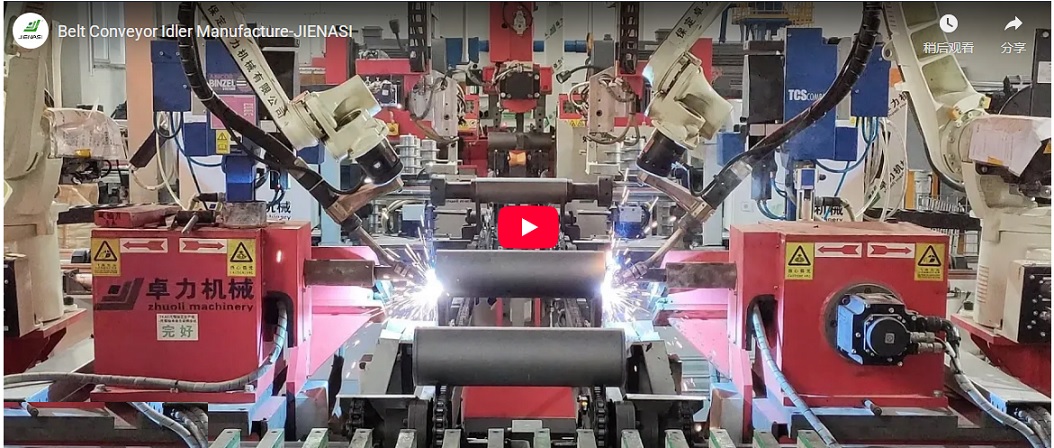
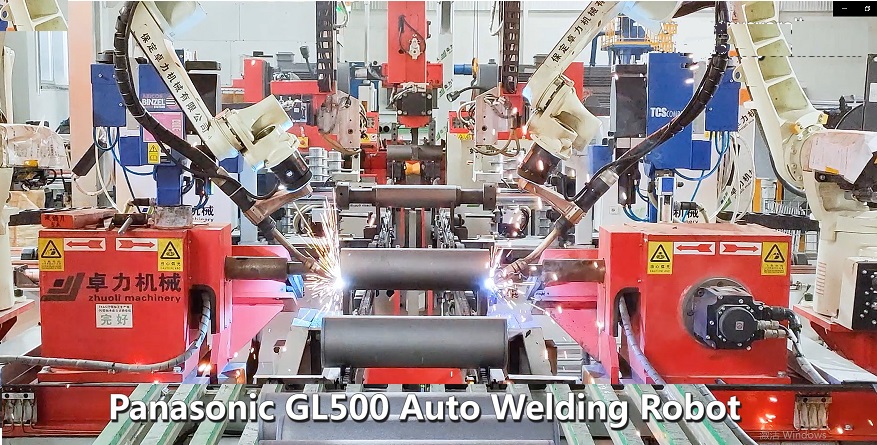
Step 2 - Ring Welding (MIG/GMAW): After preliminary machining establishes base roundness, the rings are welded using matched 308L filler wire. The center rings receive double-sided continuous fillet welds. The outer rings receive continuous welds on the high-stress side, and stitch welds (80-100mm length/spacing) on the opposite side to balance strength and heat input.
Step 3 - Hub Welding & NDT: After ring installation, the deep-groove welding of the carbon steel hubs is executed. Crucial load-bearing welds undergo rigorous Non-Destructive Testing (NDT)—both Ultrasonic Testing (UT) and Radiographic Testing (RT)—to ensure Level 1 weld criteria.
Step 4 - Final PWHT: Prior to final CNC turning, the entire assembled pulley undergoes a final Post-Weld Heat Treatment to completely eradicate any residual stresses from the ring and hub welding.
For procurement teams and conveyor engineers sourcing heavy-duty pulleys, specifying internal stiffening rings is a non-negotiable factor for long-span drives. It is the definitive engineering solution to overcome the pitfalls of dissimilar metal welding, ensuring that the pulley delivered is not only dimensionally perfect but built to outlast the harshest operational environments.
Looking to source high-performance conveyor pulleys tailored to your operational needs? Contact our engineering team today to discuss your specific drawings and material requirements.

Contact: Export Department
Phone: +86 15097752737
Tel: +86 0312 5308005
Company: Baoding Zhuoli Machinery Co.,Ltd
Add: 3934 Tower3,Weilaishi building,Xiongan New Area.Baoding city,China