

Following up on our previous article regarding the manufacturing process of stainless steel pulley tubes, we explored the core workflow from plate rolling to forming. However, for heavy-duty conveyor equipment operating in high-altitude, high-humidity, or highly corrosive mining areas in South America (such as copper and lithium mines), welding quality directly determines the equipment's corrosion-resistant lifespan and operational safety.
In busy production sites or during client acceptance phases, engineers often need to make rapid judgments without waiting for final Non-Destructive Testing (NDT) reports like X-ray or Ultrasonic Testing. So, how can one quickly and accurately conduct a preliminary assessment of stainless steel welding techniques through visual inspection the moment welding is completed?
As a manufacturer with years of experience serving high-end mining enterprises in South America, this article will decode two core indicators for rapid on-site quality inspection: slag removal status and weld seam color.
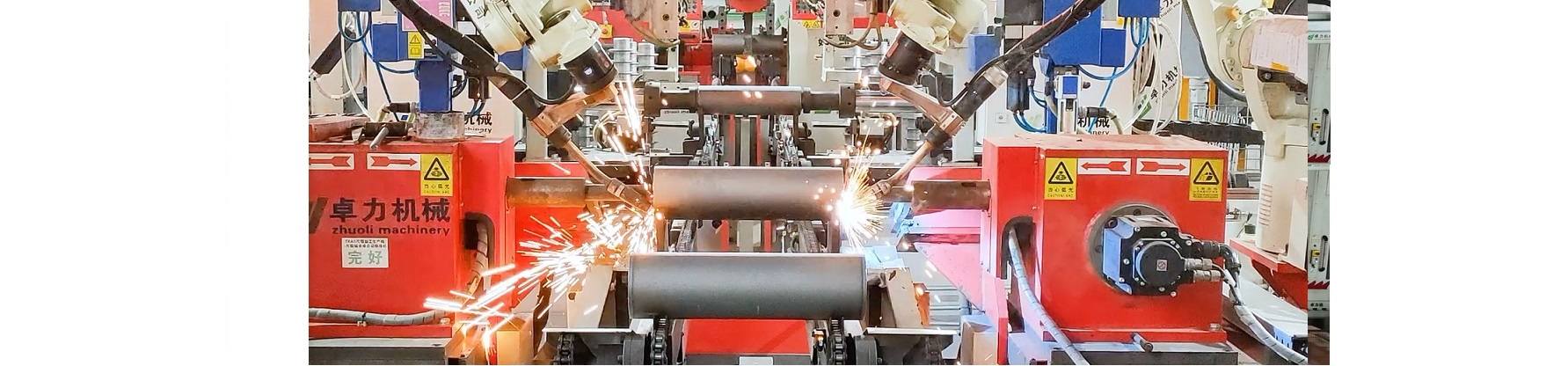
The longitudinal and circumferential seams of stainless steel pulley tubes are typically welded using the Submerged Arc Welding (SAW) process. After welding, the condition of the slag on the weld surface is a direct reflection of whether the underlying heat input and parameter settings are reasonable.
Premium Workmanship (Natural Peeling):
When welding voltage, current, and speed are perfectly matched, the slag will have a different shrinkage rate than the weld metal as it cools. In this ideal scenario, the slag will naturally curl up and peel off, or flake off completely with a light tap from an inspection hammer. The underlying weld seam will display a uniform, smooth ripple pattern, requiring absolutely no destructive cleaning with tools like pneumatic chisels.
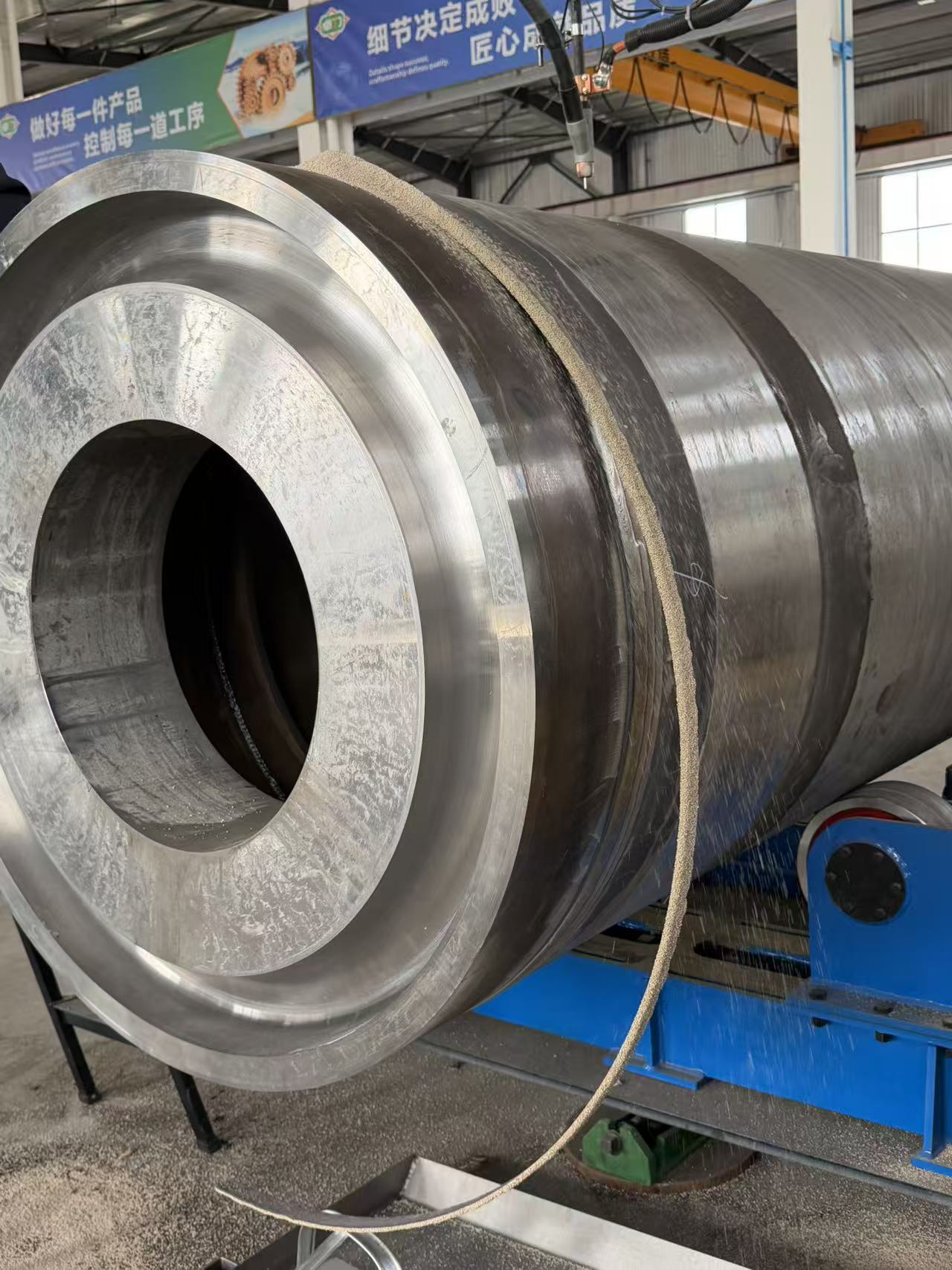
Inferior Workmanship (Slag Adhesion):
If the slag firmly adheres to the weld surface, requiring workers to forcefully remove it with pneumatic chisels, it indicates a flaw in the welding process. This is generally caused by two factors: First, the welding voltage is too high, resulting in an overly long arc, a wide and shallow weld pool, and poor flux melting. Second, excessive deposited metal in a single pass. For thick plates that require "multi-pass, multi-layer welding," rushing the schedule by using a high-current single pass leads to excessive heat input. Both situations will destroy the internal crystalline structure of the stainless steel, thereby reducing its corrosion resistance.
For austenitic and duplex stainless steels, heat input during welding causes the surface oxide film to thicken, resulting in different colors. According to international welding inspection standards such as AWS D18.2 and ISO 15607, weld color is not just an appearance issue; it is a direct indicator of the strength of corrosion resistance.
During on-site inspections, we can quickly determine whether the welding quality of the pulley tube meets the standard by comparing it against the following five levels:
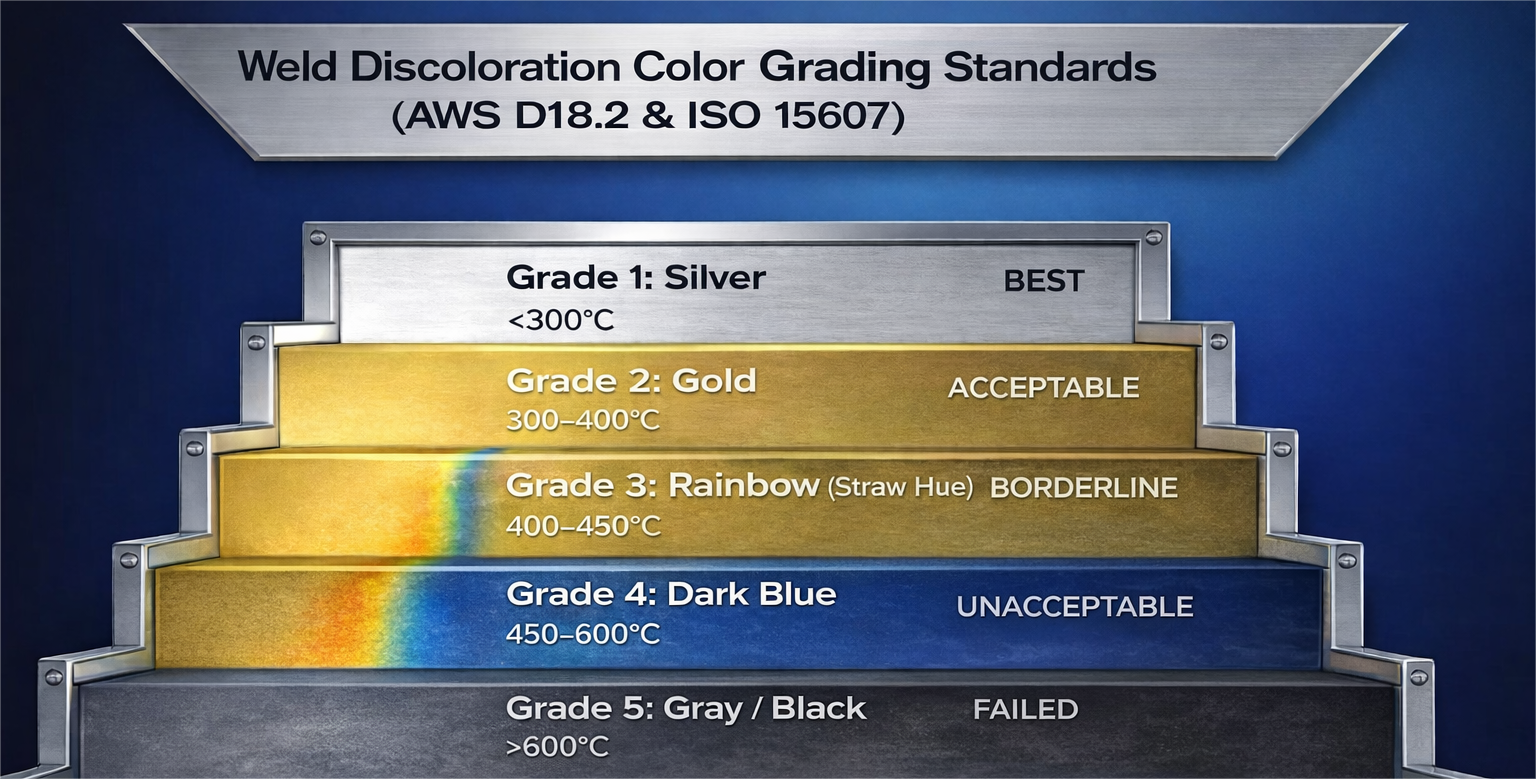
Level 1: Silver-White (Optimal State)
The surface temperature of the welding zone is strictly controlled below 300 degrees Celsius. The microscopic oxide film is extremely thin (less than 10nm), and chromium-rich oxides (Cr2O3) are distributed very evenly on the surface. This is the ideal state for equipment in high-standard South American mines, representing excellent shielding gas coverage and precise heat input control, yielding the best corrosion resistance.
Level 2: Golden Yellow (Qualified State)
The welding temperature is between 300 and 400 degrees Celsius. The oxide film thickness increases to 10-30nm, and trace amounts of iron oxide (FeO) begin to mix in. Although the corrosion resistance decreases by about 10% to 20% compared to silver-white, it remains an excellent product in standard production, fully capable of meeting the rigorous demands of most heavy industrial scenarios.
Level 3: Colorful/Yellow-Blue (Marginal State)
The temperature reaches 400 to 450 degrees Celsius, and the oxide film thickness reaches 30-50nm. This indicates potential localized disturbance in the shielding gas or heat accumulation due to a slower welding speed. In highly corrosive mining environments, such welds are in a marginal warning state and usually require pickling and passivation treatments to restore their anti-corrosion capabilities.
Level 4: Dark Blue (Unqualified State)
The temperature reaches a high of 450 to 600 degrees Celsius, with an oxide film thickness of 50-100nm. At this point, the grains of chromium-rich oxides begin to coarsen. The appearance of this color means the risk of intergranular corrosion increases sharply. If used in damp South American mineshafts, the dark blue areas will quickly become a breakthrough point for rust. Such welds must be classified as unqualified.
Level 5: Grey-Black (Scrapped State)
Temperature control is completely lost, exceeding 600 degrees Celsius. The oxide film thickness is greater than 100nm, the microstructure becomes loose and porous, and iron oxide accounts for more than 50%. At this stage, the corrosion resistance of the stainless steel surface is fundamentally lost. This is usually caused by a severe lack of shielding gas or extreme heat input, and the weld must be cut out and re-welded.
In the production of export-grade heavy-duty conveyor pulley tubes, "silver-white and golden yellow" is our baseline commitment to quality. By observing the slag removal of submerged arc welding and referencing the AWS D18.2 weld color standards, on-site quality inspectors can screen out potential quality risks with zero delay.
Of course, visual inspection is only the first line of defense in our rigorous quality control system. For mining pulley products exported to high-end overseas markets like South America, upon passing visual inspection, we strictly implement flaw detection (NDT) to ensure that every delivered piece of equipment can operate stably for the long term in extreme mining environments.

Contact: Export Department
Phone: +86 15097752737
Tel: +86 0312 5308005
Company: Baoding Zhuoli Machinery Co.,Ltd
Add: 3934 Tower3,Weilaishi building,Xiongan New Area.Baoding city,China