

When manufacturing heavy-duty conveyor pulleys, every component must be engineered to withstand immense stress. In our previous articles, we discussed how we ensure perfection after the pulley shell is formed—through strict visual inspections during welding and advanced Ultrasonic and X-ray NDT testing.
But what happens before the welding even begins? How do we shape the massive steel tubes (shells) that form the core of the pulley?
For standard pulleys, cold rolling is a highly effective method. However, when an application demands an exceptionally thick-walled pulley, standard cold rolling is no longer an option. To prevent structural damage and ensure optimal long-term performance, we turn to a specialized process: Hot Rolling.
Here is why heating the steel is the secret to manufacturing indestructible thick-walled pulleys.
To create a pulley tube, a flat steel plate is fed through heavy industrial rollers that bend it into a perfect cylinder. When the steel plate is relatively thin, this can be done at room temperature (cold rolling) without issue.
However, as the thickness of the steel increases, its resistance to bending skyrockets. If you attempt to force a highly thick steel plate through cold rollers, severe problems occur:
Micro-Cracking: The immense mechanical force required to bend thick cold steel stretches the outer fibers of the metal beyond their limits, leading to surface and internal cracks.
High Residual Stress: Forcing the metal into a curve locks massive amounts of mechanical stress inside the steel plate. Once the pulley is put into operation under heavy conveyor loads, this trapped stress can cause premature fatigue and catastrophic failure.
To eliminate the risk of cracking and material degradation, we utilize the hot rolling process for heavy-duty, thick-walled pulley tubes.
The concept is beautifully simple: heat softens the steel.
Before the flat steel plate is fed into the rolling machine, it is heated to extreme temperatures in an industrial furnace. This heat fundamentally changes the molecular structure of the steel, making it highly ductile and pliable.
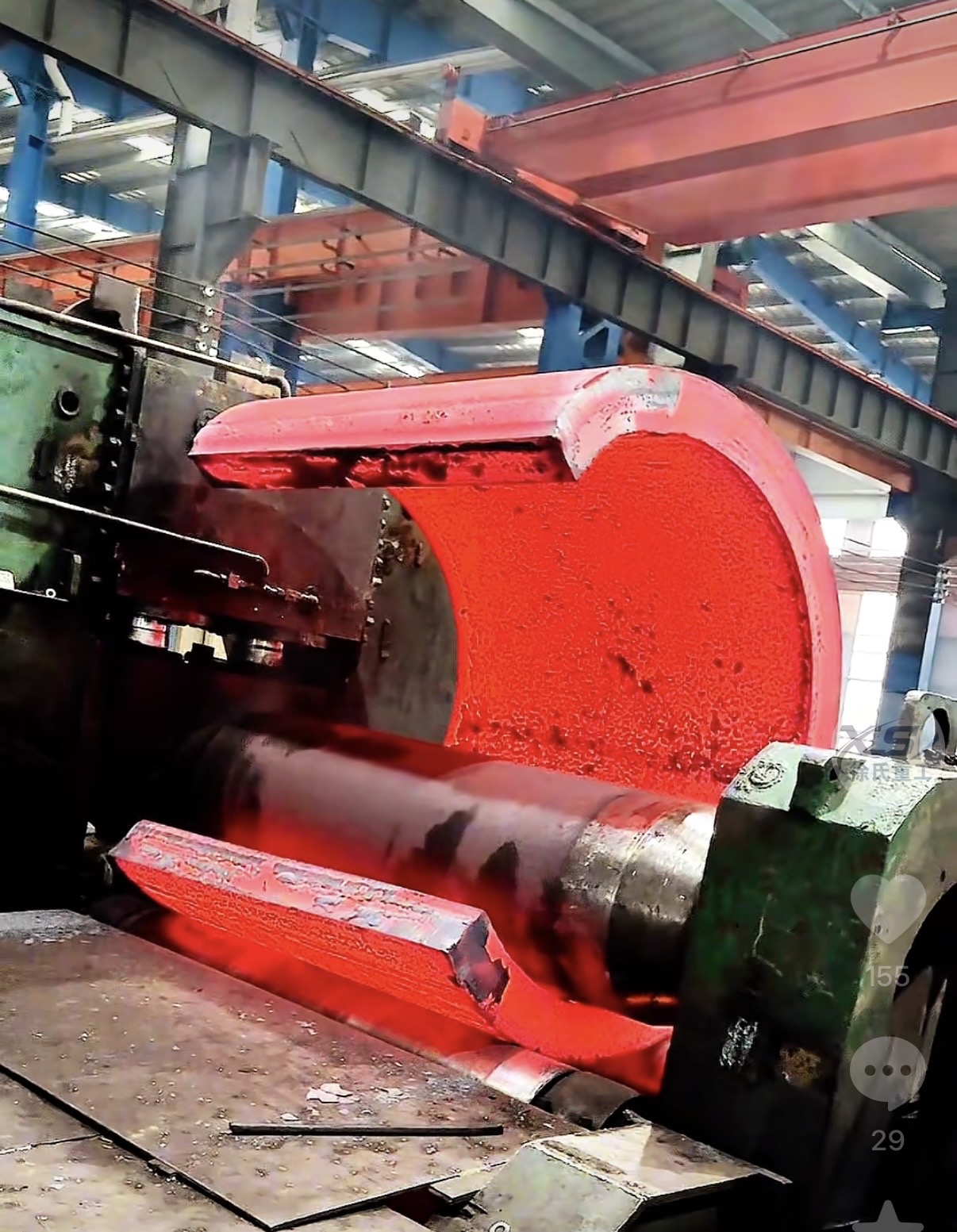
Instead of aggressively forcing stiff metal to bend, the hot rolling process gently guides the softened metal into a cylindrical shape. Because the steel is pliable, the rolling process causes virtually no internal damage to the material. Once it cools, the steel regains its full structural rigidity, resulting in a perfectly round, stress-free, and crack-free pulley tube.
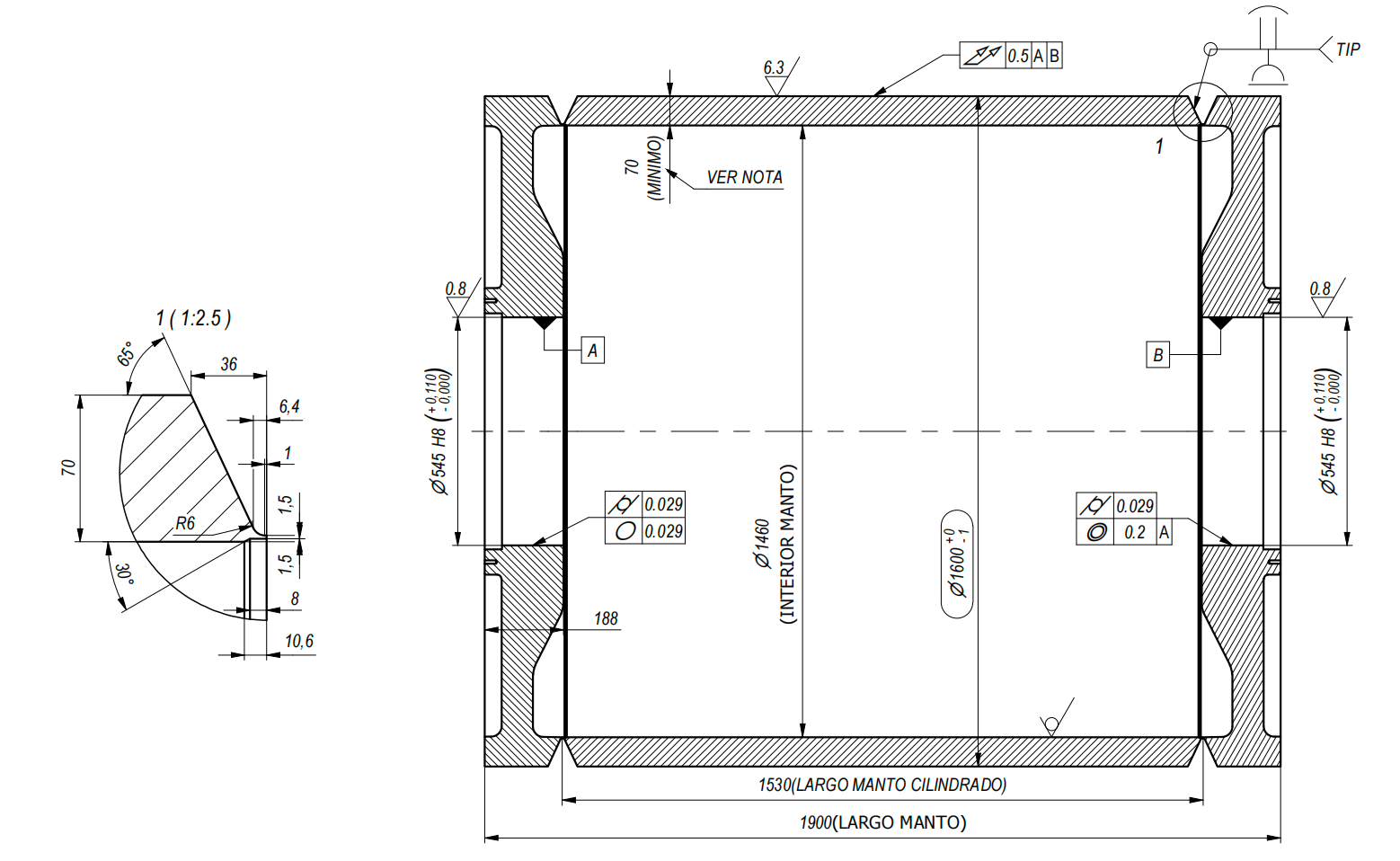
To understand when hot rolling is necessary, take a look at a recent project we handled for a client (referenced in the mechanical drawing above).
We were tasked with manufacturing a massive Drive Pulley designed for extreme industrial environments. The specifications were daunting:
Overall Weight: 7,235 KG (over 7 tons)
Outer Diameter: 1,600 mm
Wall Thickness: A minimum of 70 mm (nearly 2.75 inches of solid steel)
You cannot cold-roll a 70mm thick steel plate into a 1.6-meter cylinder without tearing the metal apart. For this client, hot rolling was not just an option; it was an absolute engineering necessity. By heating the steel first, we were able to seamlessly form the 1530mm long cylinder shell without compromising the integrity of the 70mm thick plate.
Starting with a flawless, hot-rolled shell makes all the subsequent steps in our manufacturing process possible.
Because hot rolling prevents micro-cracks from forming in the base metal, it guarantees that the subsequent longitudinal welds will be structurally sound. When our technicians eventually perform [Ultrasonic (UT) and X-ray (RT) testing] on this 7-ton pulley, they are inspecting a product that has been engineered for perfection from the very first step.
At JIENASI, we know that long-term performance doesn't happen by accident. By utilizing hot rolling for our thick-walled drum pipes, we ensure that the metal retains its natural strength, providing our clients with conveyor pulleys that won't just endure the heavy workload—they will master it.

Contact: Export Department
Phone: +86 15097752737
Tel: +86 0312 5308005
Company: Baoding Zhuoli Machinery Co.,Ltd
Add: 3934 Tower3,Weilaishi building,Xiongan New Area.Baoding city,China